Why European Luxury Cars Need the Correct Battery Technology
A battery is a battery, until it isn’t. That assumption works fine for a basic economy car, but it falls apart quickly with European luxury vehicles, where the electrical system is often more complex than the engine itself. Brands like Mercedes-Benz, BMW, Audi, and Porsche build cars around dozens of electronic systems running simultaneously, and the battery isn’t just there to start the engine anymore. It’s there to keep an entire network of sensitive electronics stable at all times.
Installing the wrong battery in one of these vehicles doesn’t just risk a slower start on a cold morning. It can cause dashboard warning lights, malfunctioning comfort features, and in some cases, long-term damage to components that are expensive to replace.
Understanding why these vehicles are so particular about battery specifications helps explain why getting this decision right matters far more than it does in a typical car.
1. Modern Luxury Cars Draw Power Even When the Engine Is Off
Unlike older vehicles, today’s European luxury cars continue drawing electrical power long after the ignition is turned off. Alarm systems, keyless entry sensors, onboard computers, and climate memory settings all stay active in a low-power state, constantly pulling a small amount of energy from the battery.
A battery that isn’t built to handle this kind of sustained, low-level drain wears down faster and struggles to hold a charge, even if it seems fine when the engine is running. This is one of the main reasons a standard battery, even a highly rated one, often underperforms in a vehicle it wasn’t designed for.
2. AGM Batteries Are Often Required, Not Optional
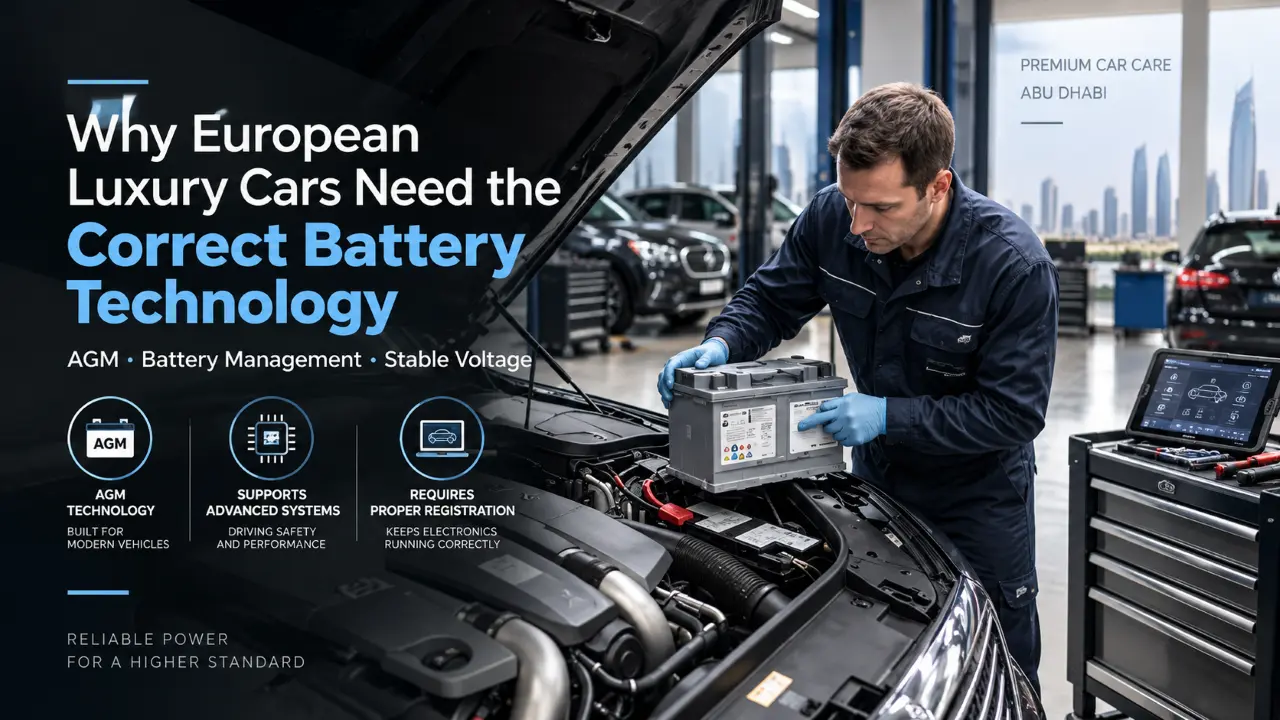
Many European luxury vehicles are built specifically around Absorbent Glass Mat, or AGM, battery technology rather than traditional flooded lead-acid batteries. AGM batteries handle deep discharge cycles better, recover charge more efficiently, and are built to support vehicles with stop-start engine systems, a feature common across most modern European models.
Installing a standard battery in a vehicle designed for AGM technology doesn’t just underperform; it can actively conflict with the car’s charging system, since the vehicle’s computer is calibrated to expect AGM-specific voltage and charging behavior.
Getting this specification wrong is one of the most common and costly battery mistakes owners make.
3. The Battery Management System Needs to Recognize the Replacement
European luxury cars typically include a battery management system that monitors the battery’s condition, charge level, and health in real time, and factors that information into how the car’s electrical systems behave. When a battery is replaced without properly registering it with the vehicle’s computer, the system can continue operating based on outdated information about the old battery’s condition.
This mismatch can lead to inaccurate charging behavior, dashboard warnings that don’t reflect the battery’s actual state, or reduced battery lifespan because the car isn’t charging it correctly.
This is one of several reasons battery replacement on these vehicles is better handled through a specialist familiar with car battery replacement in Abu Dhabi rather than treated as a simple swap, since the registration step is easy to overlook without the right diagnostic equipment.
4. Cold Cranking Amps Aren’t the Only Number That Matters
Many drivers assume a higher cold cranking amp rating automatically means a better battery, but European luxury vehicles are engineered around specific voltage curves and reserve capacity figures that go beyond that single number.
A battery with impressive cranking power but the wrong reserve capacity or physical size can still cause electrical inconsistencies, even if it starts the car without issue initially.
Manufacturer specifications exist for a reason in these vehicles, and matching them precisely tends to matter more than chasing the highest number on a battery’s label.
5. Abu Dhabi’s Climate Adds an Extra Layer of Strain
Heat is one of the fastest ways to shorten a battery’s lifespan, and Abu Dhabi’s climate puts sustained thermal stress on a vehicle’s electrical system for much of the year.
High ambient temperatures accelerate the chemical breakdown inside a battery, which is already a bigger concern for European luxury vehicles given how much they rely on a stable electrical supply.
A battery that might last several years in a milder climate can degrade noticeably faster under consistent heat exposure, which makes choosing a battery genuinely rated for high-temperature performance, rather than one rated for average conditions, especially important for owners in this region.
6. Comfort and Safety Features Depend on Stable Voltage
Adaptive suspension, active safety sensors, parking assistance cameras, and climate control systems in European luxury cars all rely on a stable, consistent voltage supply to function correctly.
Even minor voltage fluctuations caused by an underperforming or mismatched battery can cause these systems to behave inconsistently, triggering error messages or temporarily disabling features until the issue is resolved.
This is different from older vehicles, where a weak battery mostly just meant a slow engine start. In a modern luxury car, a weak or incorrect battery can ripple into features the driver relies on every day.
7. Battery Replacement Timing Matters More Than Drivers Expect
Many owners wait until a battery fails completely before replacing it, but European luxury vehicles often show subtle signs of battery strain well before a full failure occurs, such as flickering interior lights, slower window or seat adjustments, or intermittent warning messages that clear on their own. These symptoms are frequently misdiagnosed as unrelated electrical issues rather than an aging battery nearing the end of its usable life.
Replacing a battery proactively, based on age and performance signs rather than waiting for a complete failure, tends to prevent the cascading electrical issues that can occur when a battery fails unexpectedly in one of these vehicles.
Why Getting the Right Battery Matters More in These Vehicles
The complexity that makes European luxury cars comfortable and advanced to drive is the same complexity that makes them unforgiving of the wrong battery choice. Every system, from climate memory to adaptive safety features, is built around the assumption that the electrical supply behind it is stable and correctly specified.
Because of this, battery replacement in these vehicles isn’t just about finding something that fits the terminal posts and starts the engine. It requires matching the manufacturer’s exact specifications and ensuring the vehicle’s systems are properly updated to recognize the new battery once it’s installed.
Conclusion
A battery might seem like one of the simpler components in a modern vehicle, but in European luxury cars, it plays a far more central role than most owners realize. The wrong battery, or one installed without proper registration to the vehicle’s systems, can lead to problems that go well beyond a slow start on a cold morning.
Understanding what these vehicles actually require, from AGM technology to climate-appropriate ratings, helps owners avoid the electrical issues that come from treating a luxury car battery like any other replacement part.