Why Do Car Batteries Fail Without Warning in Dubai?
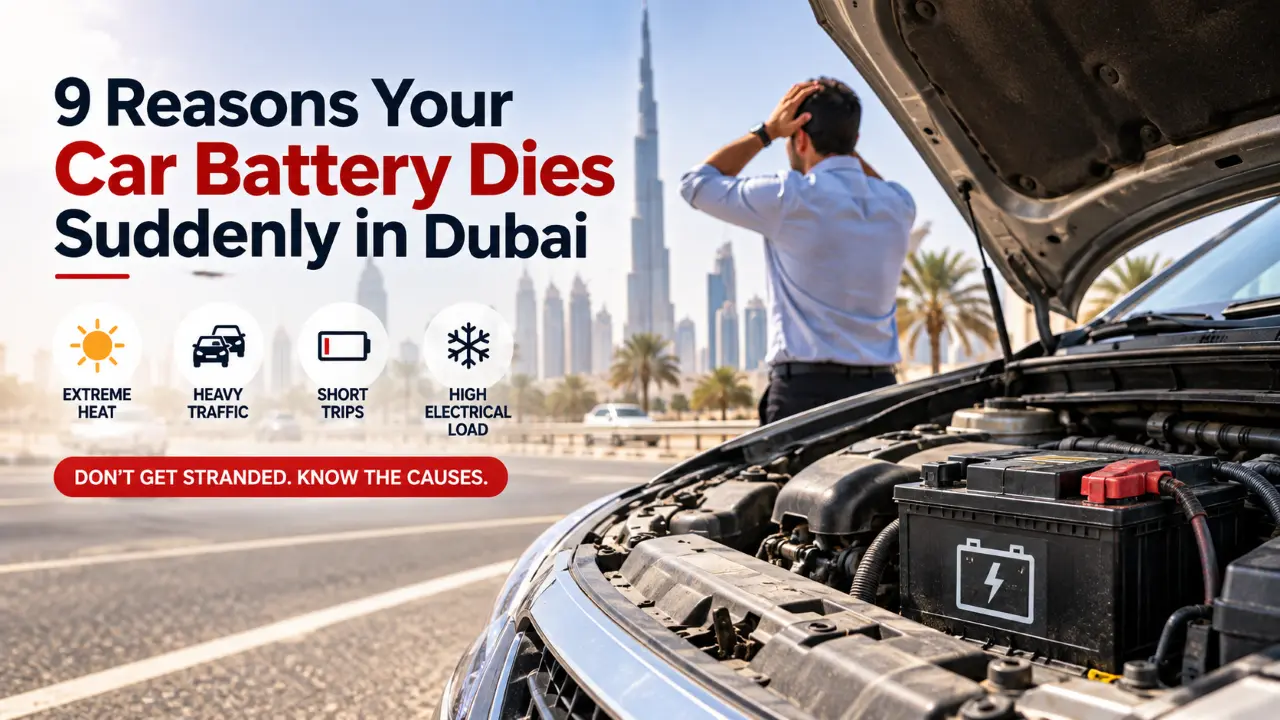
A car battery can seem fine one day and leave you stuck the next morning. This can be frustrating, especially when you need your car for work, school, or daily travel.
Car batteries often fail suddenly in Dubai because of extreme heat, heavy traffic, short trips, and natural battery wear. Loose connections, charging problems, high electrical loads, and poor battery care can also weaken the battery before the driver notices any clear warning signs.
Why Car Batteries Can Fail Suddenly in Dubai?
Dubai’s hot climate puts extra stress on vehicle batteries. A battery may slowly lose its strength for months while still starting the engine normally. This makes the final failure appear sudden even though the battery was already becoming weak.
The following are some of the main reasons a battery can stop working without giving much warning.
1. Extreme Heat Damages the Battery
High temperatures are one of the biggest reasons for battery problems in Dubai. When the outside temperature becomes very high, the heat under the bonnet can become even greater.
This speeds up the chemical activity inside the battery and can cause water loss in some battery types. Over time, the heat can damage the battery plates and reduce its ability to hold a charge.
A battery may still start the car normally until its condition becomes too weak. Once its remaining power drops below a certain level, it can fail very quickly.
2. The Battery Is Reaching the End of Its Life
Every car battery has a limited working life. Even a good battery will slowly lose its ability to store energy after years of use. In Dubai, heat can make this process faster than in cooler areas.
An older battery may still provide enough power during normal starts, so the driver may not notice a problem. However, its reserve power becomes lower as it ages.
A small change in temperature, a longer parking period, or extra electrical use can then push it past its limit. Checking the battery’s age can help owners replace it before it fails.
3. Short Trips Do Not Fully Recharge the Battery
Starting the engine uses a large amount of battery power. The alternator replaces this energy while the car is running, but very short trips may not give it enough time to restore the charge.
Frequent short drives can slowly leave the battery undercharged. This becomes more serious when the car is used mainly for quick trips around the city.
The battery may appear healthy because the engine still starts, but its charge level can keep falling over time. Regular longer drives can help, but an older or damaged battery may still need testing or replacement.
4. Heavy Dubai Traffic Puts More Load on the Charging System
Stop-and-go traffic is common on busy Dubai roads. During slow driving, the engine may spend long periods at low speed while the air conditioner, lights, fans, screens, and other systems continue using electricity.
This creates a demanding environment for the charging system. If the alternator is not working properly, the battery may not receive enough charge.
Over time, repeated traffic conditions can expose a weak charging system or a tired battery. Drivers who spend many hours in city traffic should pay attention to slow starting, dim lights, or electrical changes.
5. The Air Conditioner Adds Electrical Demand
Using the air conditioner is almost a necessity during Dubai’s hot months. The cooling system itself relies on engine power, while the blower, cooling fans, and other electrical parts also increase the vehicle’s electrical demand.
A healthy charging system should handle this load. However, an aging battery or weak alternator may struggle when several electrical systems operate together. The battery can become more stressed when the car is sitting in traffic with the air conditioner running.
This does not mean normal AC use damages a good battery, but it can reveal a battery or charging problem that was already developing.
6. Loose or Corroded Battery Connections
The battery may be in good condition but still fail to start the car if its connections are poor. Battery terminals can become dirty or corroded over time. A loose connection can also prevent enough electrical current from reaching the starter.
This problem can sometimes appear suddenly. The car may work normally one day and then fail to start the next. Corrosion around the terminals, visible white or green deposits, or loose cables are signs that the connections should be checked.
Cleaning and tightening the terminals may solve a connection problem, but damaged cables or terminals may need professional attention.
7. A Weak Alternator Can Drain the Battery
The alternator charges the battery while the engine is running and powers many of the vehicle’s electrical systems. If the alternator becomes weak, the battery may not receive enough charge.
At first, the car may continue to run normally because the battery still has some stored energy. After repeated driving, however, the battery can become too weak to start the engine.
This can make the battery look like the main problem when the real issue is the charging system. Testing both the battery and alternator is therefore important when a battery keeps losing charge.
8. Electrical Accessories Can Slowly Drain Power
Modern cars have many electrical features, including alarms, tracking systems, dash cameras, entertainment units, phone chargers, and other accessories. Some devices can continue drawing a small amount of power when the vehicle is parked.
A small drain may not cause an immediate problem. But if the car stays parked for several days, the battery can lose enough charge to prevent starting.
Older batteries are more sensitive to this type of drain because they already have reduced capacity. If a car repeatedly has a dead battery after being parked, an electrical drain should be checked instead of replacing the battery again and again.
9. Poor Battery Care Can Shorten Its Life
A battery does not always receive attention until it stops working. Many drivers only think about it when the engine refuses to start. However, simple checks can help identify problems earlier.
Owners should look for corrosion, damaged cables, swelling, cracks, or other visible changes. It is also useful to have the battery tested when the vehicle is serviced, especially if the battery is getting older.
Keeping the battery clean and making sure the connections are secure can also help. Proper care cannot stop normal aging, but it can reduce avoidable problems.
How to Reduce the Risk of a Sudden Battery Failure?
You cannot control Dubai’s heat, but you can reduce some of the stress placed on your battery. Regular testing is one of the easiest ways to find a weak battery before it leaves you stranded.
If you need a replacement or battery check, Sayara Battery can help you choose the right car battery in Dubai for your vehicle and arrange the required service. It is also important to use the correct battery size and specification rather than choosing one only because it is cheaper.
A few simple habits can also help:
- Check the battery condition during regular servicing.
- Keep battery terminals clean and secure.
- Avoid leaving lights or accessories running when the engine is off.
- Have the alternator checked if the battery repeatedly loses charge.
- Replace an old battery before its condition becomes critical.
- Take repeated starting problems seriously, even if the car still starts.
Conclusion
A car battery can fail without much warning because its condition often becomes weaker slowly while the car continues to start normally. In Dubai, extreme heat, traffic, short trips, high electrical use, weak charging systems, poor connections, and battery age can all increase the risk.
Regular testing and timely replacement can reduce the chance of being stranded. If you notice slow starting or repeated battery problems, get your car battery checked by a reliable provider to identify the issue before a complete failure occurs.