Can PPF Be Removed Without Damaging the Original Paint?
Many car owners worry about what will happen to their paint when it is time to remove paint protection film. This is a fair concern, especially when the vehicle has expensive or original factory paint.
Yes, paint protection film in Abu Dhabi can usually be removed without damaging the original paint when it is a quality film installed correctly and removed with the right method. The film is designed to protect the paint, not harm it.
However, the condition of the paint, age of the film, heat exposure, and removal method can all affect the final result.
How Is PPF Attached to Car Paint?
PPF is attached to the vehicle using a special adhesive layer. This adhesive keeps the film in place while allowing it to protect the paint from road debris, scratches, sand, and other small hazards. Good quality film uses adhesive that is made for automotive paint.
The adhesive is strong enough to keep the film attached during washing, driving, and exposure to heat. At the same time, it should allow the film to be removed when needed. Proper installation is important because poor film or bad surface preparation can create problems during removal later.
Can PPF Usually Be Removed Safely?
In most cases, PPF can be removed safely when the film is in good condition and the removal is done correctly. Professional installers normally work slowly and carefully instead of pulling the film away quickly.
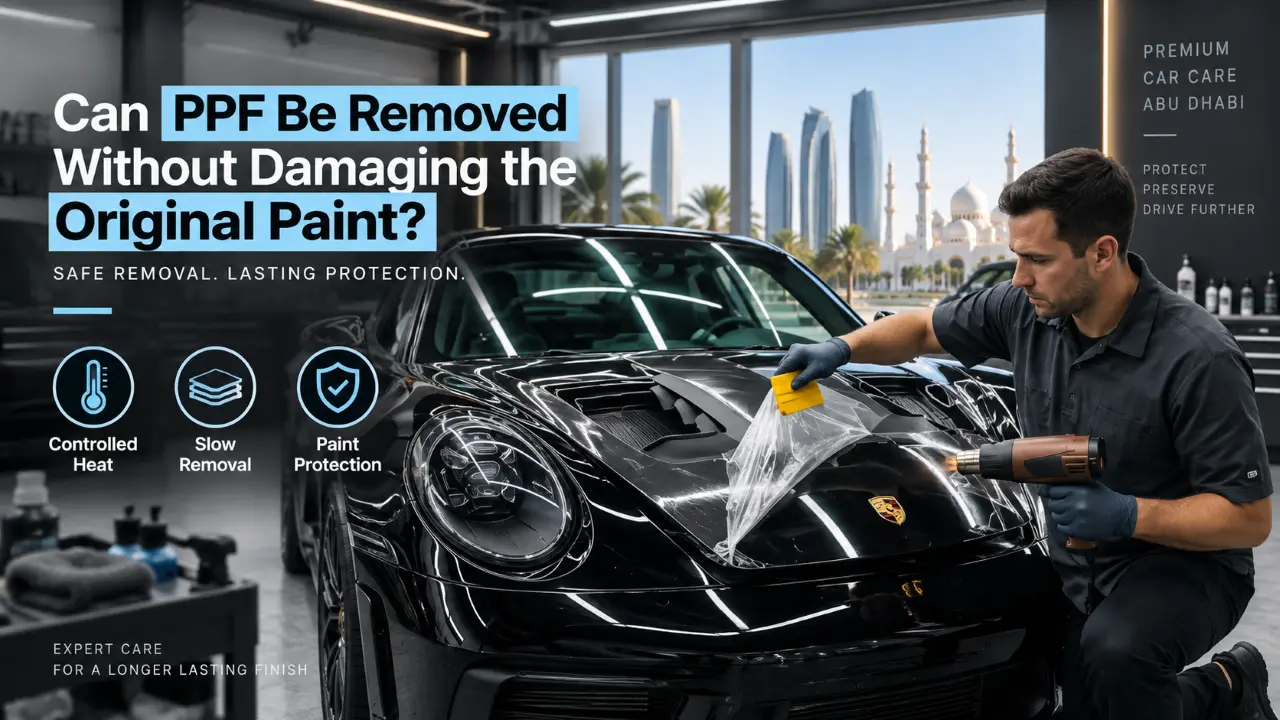
The film is often warmed to soften the adhesive. Once the adhesive becomes more flexible, the film can be lifted gradually from the surface. The goal is to remove the film without putting unnecessary stress on the paint.
A careful process is especially important around body edges, curves, badges, and areas where the film has been exposed to strong heat for a long time.
Why Does Film Quality Matter During Removal?
Not all PPF products are made to the same standard. High-quality films are designed to remain stable during years of sun, heat, washing, and road exposure. Their adhesive systems are also made to allow proper removal.
Cheap or poor-quality film may become brittle, yellow, cracked, or difficult to remove. The adhesive can also become harder to work with after long exposure to heat.
This does not mean every old film will damage paint, but it does increase the need for careful removal. Choosing a trusted product from the beginning can make future removal much easier.
Does the Age of PPF Affect Removal?
Yes, the age of the film can affect how easy it is to remove. PPF that has been exposed to strong sunlight, high temperatures, and regular washing for many years may become harder or less flexible.
The top layer can also show signs of wear, such as cloudiness, yellowing, cracks, or heavy scratches. If the film has started to break down, removing it may take more time.
This is one reason why following the manufacturer’s recommended service life is important. Replacing older film before it becomes badly degraded can make the removal process easier.
Can Heat Help Remove PPF?
Heat is commonly used to make PPF removal easier. When the film and adhesive are warmed to a suitable level, the adhesive can become softer. This allows the installer to pull the film away more smoothly.
However, heat needs to be controlled carefully. Excessive heat can affect the film, adhesive, or vehicle surface. Professional installers know how to warm the material without creating unnecessary risk.
The film should also be pulled at a suitable angle and speed. Trying to remove it quickly without proper preparation can leave adhesive behind or place extra stress on the paint.
What Happens If Adhesive Remains on the Paint?
Sometimes a small amount of adhesive remains after the film is removed. This is not necessarily a sign that the paint has been damaged. The remaining adhesive can usually be cleaned with a suitable automotive-safe product.
The surface should not be attacked with harsh chemicals, rough tools, or aggressive scraping. These methods can create scratches or affect the finish.
A professional can identify the type of residue and use the correct method to remove it. After cleaning, the paint can be washed and inspected to check its condition.
Can PPF Pull Off Factory Paint?
Quality PPF that has been correctly installed on healthy factory paint generally should not pull the paint away during normal removal. Factory paint is bonded firmly to the vehicle surface and is designed to withstand normal use.
However, there are situations where extra care is needed. Repainted panels may have weaker paint adhesion if the repair was not done properly. Paint that is already peeling, damaged, or poorly bonded can also be affected during film removal.
For this reason, the condition of the paint should be checked before installation and again before removal.
Is Repainted Paint Different From Factory Paint?
Yes, this is an important point. Factory paint usually has a controlled application and curing process that gives it strong adhesion. Repainted panels can vary greatly depending on the quality of the body repair and paint work.
If a panel was repainted poorly, the adhesive from the PPF may bond more strongly than the new paint bonds to the surface underneath.
Removing the film could then pull up weak paint. This is not necessarily a fault with the PPF. It is often related to the condition or quality of the repaint. Professional inspection can help identify this risk before installation.
What Are the Signs That PPF Needs Replacement?
PPF does not need to stay on a vehicle forever. You should inspect it regularly for signs of wear. Small scratches are normal, but heavy damage may mean that a section has reached the end of its useful life.
Look for:
- Yellowing or changes in color
- Cracks in the film
- Peeling edges
- Large scratches
- Cloudy or hazy areas
- Deep cuts
- Bubbles or lifting
- Areas where the adhesive is failing
Replacing badly worn film can help maintain both protection and appearance.
Should You Remove PPF Yourself?
It may be possible to remove a small section yourself, but professional removal is usually the safer choice when you want to protect the paint. Removing film requires the right temperature, tools, and technique.
Pulling the material too quickly can leave adhesive behind or cause problems around edges. Using sharp tools can also scratch the paint.
If the film is old, damaged, or difficult to lift, the risk becomes higher. Professional removal may cost more than doing it yourself, but it can reduce the chance of an expensive paint repair later.
What Is the Correct PPF Removal Process?
PPF Removal Process at a Glance:
| Step | What Happens | Why It Matters |
| 1. Vehicle cleaning | Dirt and dust are removed | Reduces surface contamination |
| 2. Film inspection | Film and paint condition are checked | Identifies possible risks |
| 3. Controlled heating | Film is warmed carefully | Softens the adhesive |
| 4. Edge lifting | A suitable edge is selected | Creates a safe starting point |
| 5. Slow removal | Film is pulled back gradually | Reduces stress on the paint |
| 6. Adhesive removal | Residue is cleaned | Restores a clean surface |
| 7. Paint inspection | Surface is checked again | Confirms the condition of the paint |
| 8. Final cleaning | Vehicle is cleaned and finished | Improves the final appearance |
Can Old PPF Damage Paint If Left Too Long?
Leaving PPF on the vehicle beyond its useful life can make removal more difficult. Long exposure to sunlight and heat can cause the film to break down. The adhesive may also become harder to remove.
This does not mean old PPF will automatically damage the paint. The condition of the film and the surface underneath are more important. However, badly degraded film should not be ignored.
Regular inspection can help you decide when replacement is needed. Following the film manufacturer’s recommended lifespan can also reduce removal problems.
Final Thoughts
PPF can usually be removed without damaging the original factory paint when the film is good quality, the paint is in good condition, and the removal is done correctly. Heat, careful pulling, proper tools, and suitable adhesive cleaners all help make the process safer.
The biggest risks usually come from poor-quality film, badly repaired paint, very old or damaged PPF, and aggressive removal methods. If you are unsure about the condition of your film or paint, professional inspection is a safer choice.
With proper installation, care, and removal, PPF can protect your car’s original finish without creating unnecessary problems when it is time to take the film off.