What Causes a Jeep to Vibrate at Highway Speeds?
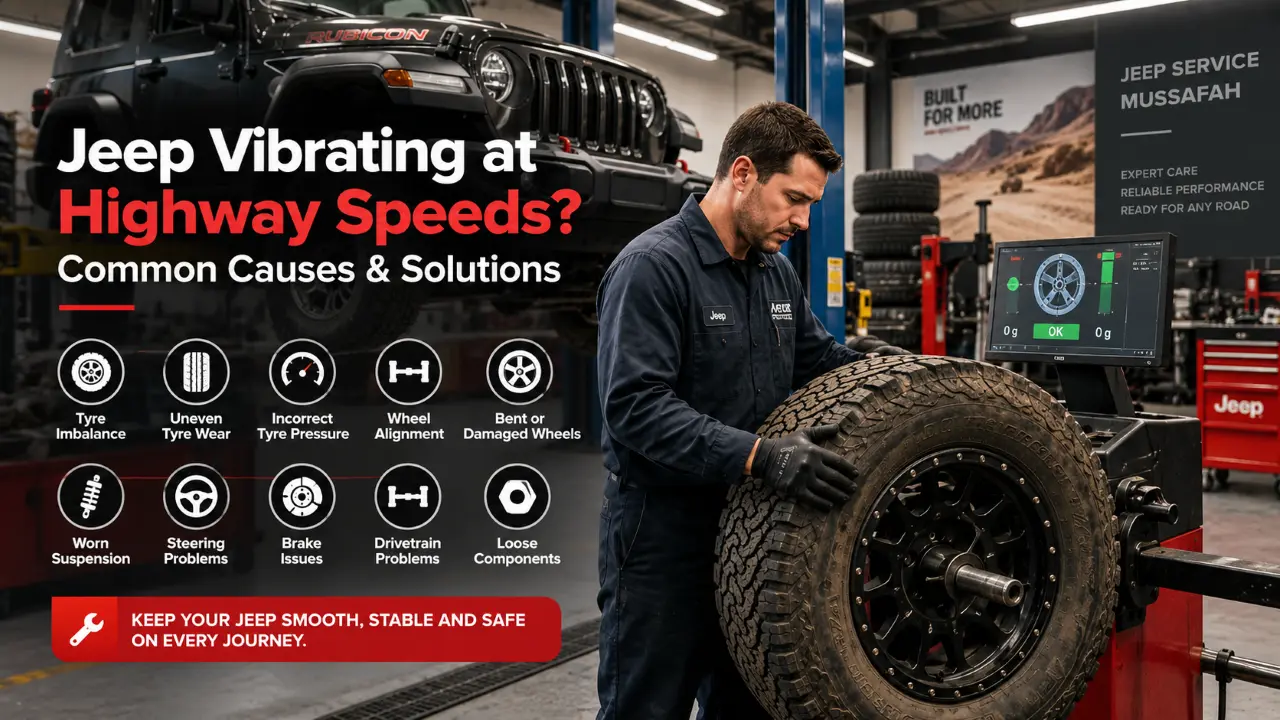
A Jeep should feel stable and smooth when you drive at highway speeds. If you start feeling shaking through the steering wheel, seats, or floor, something may need attention.
Highway vibration can come from simple issues such as tyre pressure or wheel balance, but it can also point to worn suspension, steering, or drivetrain parts.
Finding the cause early can prevent further damage and make driving safer. If the vibration keeps returning, a professional Jeep service in Mussafah can inspect the vehicle and identify the source of the problem.
Main Reasons Why a Jeep is Vibrating at Highway Speed
1. Unbalanced Wheels
Wheel imbalance is one of the most common reasons a Jeep vibrates at higher speeds. Small weights are added to wheels to help them spin evenly. If a wheel loses a weight, the tyre wears unevenly, or the wheel is fitted incorrectly, vibration may appear as your speed increases.
You may feel the shaking mainly through the steering wheel when the problem is at the front. A rear wheel problem may be felt more through the seat or floor. Having all four wheels checked and balanced can often solve the problem and improve highway driving comfort.
2. Uneven Tyre Wear
Tyres can develop uneven wear for several reasons, including incorrect pressure, poor alignment, worn suspension parts, or regular driving on rough roads. A tyre with an uneven tread surface may create vibration as it rotates at highway speed.
Look across the full tread and check for patches that appear more worn than the surrounding areas. You should also look for cracks, bulges, or other visible damage. If a tyre is badly worn or damaged, balancing it may not solve the problem. It may need to be replaced to restore safe and smooth driving.
3. Incorrect Tyre Pressure
Tyre pressure has a direct effect on how your Jeep feels on the road. A tyre that is overinflated or underinflated can change the way the vehicle responds to the road surface. Different pressure between tyres can also make the Jeep feel less stable.
Check the pressure when the tyres are cold and compare the readings with the recommended level shown on the vehicle information label or owner’s manual. Do not use the maximum pressure printed on the tyre sidewall as the normal driving pressure. Keeping the pressure correct can improve handling, tyre life, and ride comfort.
4. Wheel Alignment Problems
A Jeep can develop alignment problems after hitting potholes, kerbs, or other hard obstacles. Incorrect wheel alignment can cause the tyres to sit at the wrong angle and wear unevenly. This may result in vibration, steering pull, or an off-centre steering wheel.
Alignment problems can become more noticeable at highway speeds because the wheels are rotating much faster. If your Jeep recently hit a large pothole or you notice uneven wear on the tyres, an alignment check is worthwhile. Correcting the wheel angles can help the tyres make proper contact with the road.
5. Damaged or Bent Wheels
A strong impact can bend a wheel without creating obvious damage at first glance. This can happen after hitting a deep pothole, kerb, or rough road surface. A bent wheel may not rotate evenly, which can create vibration as speed increases.
Alloy wheels can also develop cracks after a hard impact. If the vibration started after hitting something on the road, ask a technician to inspect the wheels carefully.
A wheel that cannot be properly repaired may need replacement. Driving for a long time with a damaged wheel can also place extra stress on the tyre and suspension.
6. Worn Suspension Components
The suspension system keeps your Jeep stable and helps the tyres stay in contact with the road. Worn shock absorbers, control arm bushes, ball joints, or other suspension parts can make highway vibration worse.
You may also notice the Jeep bouncing more than usual, making knocking sounds over bumps, or feeling unstable during turns. Suspension wear is especially important to check if your Jeep is regularly driven on rough roads or off-road tracks.
A full inspection can show whether a worn component is allowing too much wheel movement. Replacing damaged parts can restore better road control.
7. Steering System Problems
Problems with steering components can cause shaking through the steering wheel, especially at higher speeds. Worn tie rod ends, steering links, ball joints, or other steering parts may allow unwanted movement in the front wheels.
The Jeep may feel loose or less precise when changing direction. You might also hear clicking or knocking sounds while turning or driving over uneven surfaces.
Because steering parts are directly linked to vehicle control, they should not be ignored. If the vibration is strong or the steering feels loose, reduce your speed and arrange an inspection before continuing long highway trips.
8. Brake Problems
If your Jeep mainly vibrates when you press the brake pedal, the braking system may be the cause. A brake disc with uneven thickness or excessive runout can make the steering wheel or vehicle shake during braking.
A sticking brake caliper can also create heat and uneven braking. You may notice a burning smell, one wheel becoming unusually hot, or the Jeep pulling to one side.
Brake problems should be checked quickly because the brakes are essential for safe stopping. Do not assume a vibration during braking is simply caused by tyre balance.
9. Driveshaft and Drivetrain Problems
A Jeep’s drivetrain can also cause vibration, particularly when the vibration is felt through the floor or becomes stronger when accelerating. The driveshaft, universal joints, axle components, and other drivetrain parts work together to transfer engine power to the wheels.
Wear, damage, or an imbalance in these parts can create noticeable shaking at certain speeds. This type of vibration may not change when you turn the steering wheel.
If the vibration is linked to acceleration rather than only road speed, the drivetrain should be inspected by a qualified technician.
10. Loose or Damaged Wheel Components
Loose wheel nuts are a serious issue and should never be ignored. If a wheel is not secured correctly, it can move slightly while the vehicle is travelling, creating vibration and affecting handling. Wheel nuts should be tightened to the correct torque recommended for your Jeep.
Other wheel components should also be checked for damage or excessive movement. If you recently had a tyre replaced, rotated, or removed, pay extra attention to any new vibration that appeared afterward. Stop driving if you suspect a loose wheel and have it checked immediately.
When Does the Vibration Happen?
The timing of the vibration can provide useful clues about its cause. If it appears only at a certain speed, wheel balance, tyre condition, or alignment may be involved. Vibration that happens mainly during braking points more toward the brakes.
If it gets stronger while accelerating, drivetrain parts may need attention. A shake that changes when you turn could be linked to the wheels, tyres, or steering system.
Paying attention to when the vibration starts and stops can help a technician find the problem faster and avoid unnecessary part replacement.
How to Prevent Highway Vibration?
Regular maintenance can reduce the chance of vibration problems. Check tyre pressure regularly and inspect the tread for uneven wear or damage. Have the wheels balanced when new tyres are installed or when vibration appears.
Check wheel alignment after a strong impact and inspect the suspension during routine servicing. If you often drive off-road, it is also important to check the steering, suspension, wheels, and drivetrain for damage.
Keeping these parts in good condition can help your Jeep remain stable at highway speeds. Early checks are usually easier and less costly than repairing damage caused by continued driving.
Conclusion
Highway vibration can come from tyres, wheels, alignment, suspension, brakes, steering, or drivetrain components. Some causes are simple to fix, while others can affect safety if they are left untreated.
Pay attention to when the vibration happens and whether you notice other signs such as uneven tyre wear, unusual sounds, steering movement, or brake problems. Do not ignore a vibration that is getting stronger or appearing more often.
If you cannot find the cause through basic checks, professional Jeep repair service in Mussafah can help diagnose the problem and keep your Jeep safe and comfortable on the highway.