What Should You Do When Your Car Breaks Down in Sharjah?
A car breakdown can happen without warning, even when your vehicle seems to be running normally. Being stuck on a busy road in Sharjah can be stressful, especially when you are unsure what to do next.
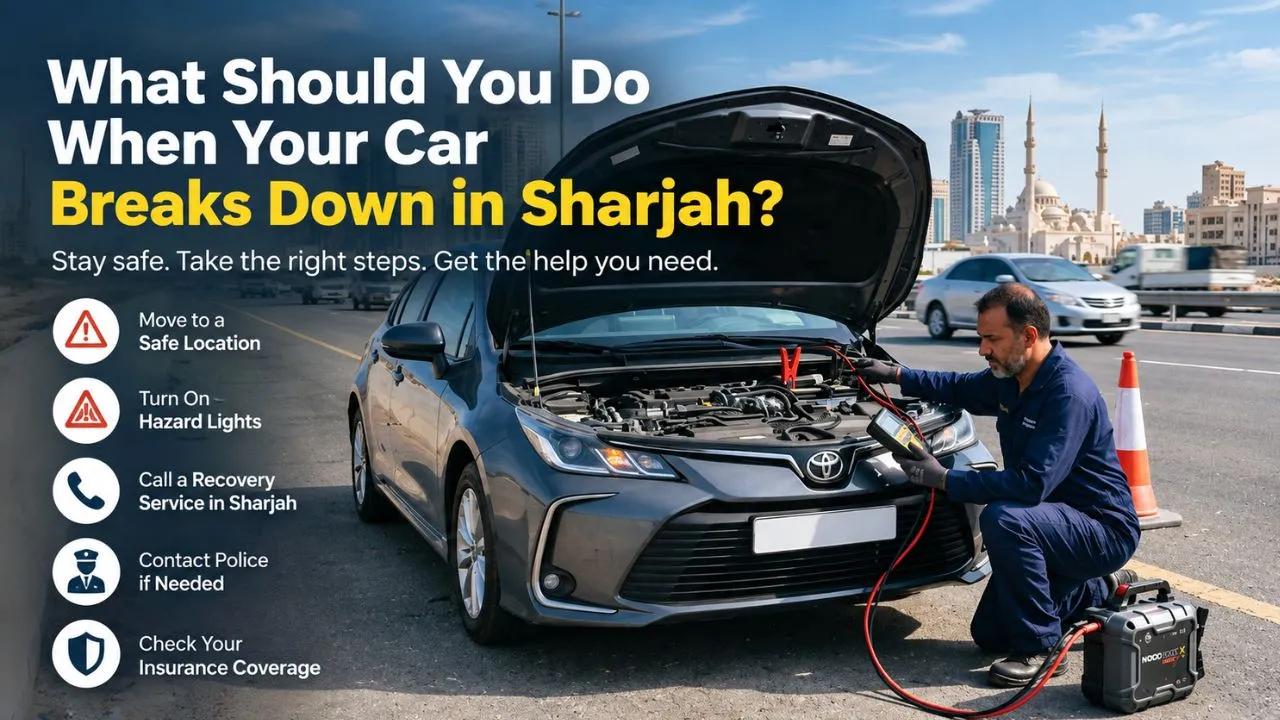
When your car breaks down, move it to the right shoulder or another safe place if it can still move, then switch on the hazard lights. Next, contact a reliable Sharjah recovery service from a trusted workshop like Sayara Battery to arrange professional assistance and vehicle towing.
This can help you get your vehicle moved safely instead of attempting risky roadside repairs on your own. If your car is blocking traffic or creating a serious danger, contact Sharjah Police on 999.
Steps to Take When Your Car Breaks Down in Sharjah
1. Move Your Car Off the Road
The first step is to move your vehicle away from moving traffic whenever possible. If the engine still runs and the steering and brakes work normally, slowly guide the car toward the far-right shoulder or a marked breakdown area.
Avoid stopping in a travel lane unless the vehicle has completely lost power. Once parked, place the transmission in Park and apply the handbrake.
Moving the car only a short distance can make it much easier for other drivers to pass and for a recovery truck to reach you.
2. Turn On the Hazard Lights
After stopping, switch on the hazard lights immediately. They tell other drivers that your vehicle has stopped because of a problem and needs attention. This is especially useful on busy roads, at night, or when visibility is poor.
Keep the lights on while waiting for assistance, as long as the vehicle battery has enough power. Do not spend too much time trying to find the cause of the fault before making the car visible. The first goal is to warn approaching drivers and make your stopped vehicle easier to notice.
3. Place a Warning Triangle When Possible
A reflective warning triangle can provide an extra warning to approaching vehicles. If you have one and can place it without entering a dangerous area, position it behind the vehicle at a suitable distance.
Around 50 to 100 meters can give drivers more time to notice the stopped car on a fast road. However, do not walk into active traffic to place it.
If the road is too busy or the shoulder is narrow, leave the triangle where it is and wait for professional assistance. Your personal safety should come before placing any warning device.
4. Decide Where You Should Wait
Where you wait depends on the road and your vehicle’s position. If you cannot safely leave the car, remain inside with your seatbelt fastened and wait for help.
If there is a safe way to leave, use the passenger side rather than stepping into moving traffic, and move to a suitable area away from the road.
Do not stand directly behind the vehicle or walk along the highway. Keep children and other passengers with you. The important point is to choose the safest available position while waiting for the recovery team.
5. Call a Sharjah Recovery Service
Once the vehicle is in a suitable position, arrange professional assistance. A recovery service can send a recovery truck to collect your vehicle and take it to a workshop or another secure location.
Explain the problem when making the call. Tell the operator whether the vehicle has a flat tyre, dead battery, overheating problem, engine fault, or complete loss of power.
Also provide your exact location. A GPS pin, road name, nearby building, exit number, or clear landmark can help the driver find you without unnecessary delays.
6. Contact Police if the Breakdown Creates a Danger
A normal vehicle breakdown does not always require police assistance. However, you should contact Sharjah Police if the vehicle is blocking traffic, has stopped in a dangerous position, or there is an immediate risk to you or other road users.
For an emergency, call 999 and explain what has happened and where you are. For non-emergency traffic support and general inquiries, 901 can be used.
If an accident caused the breakdown, follow the instructions from the authorities. Do not try to manage a serious road incident on your own.
7. Check Your Insurance for Roadside Assistance
Before paying for private towing, check your car insurance policy. Some comprehensive insurance plans in the UAE include roadside assistance as part of the coverage. Depending on the policy, this may include towing, battery support, tyre assistance, or other emergency services.
The details can vary between insurers, so do not assume every service is included. Keep your insurance card and policy information accessible on your phone. Knowing your coverage before an emergency can save time and may also help you avoid paying for a service that your insurance already provides.
8. Give the Recovery Driver Useful Information
Clear information can make the recovery process faster. When speaking with the driver, explain what happened before the vehicle stopped. For example, mention if you noticed smoke, an overheating warning, unusual engine noise, a warning light, or a sudden loss of power.
Tell them if the car can start, move, or roll. You should also provide the vehicle make and model because some cars may need special recovery equipment. Finally, share your live location or GPS pin and mention a nearby landmark if one is available.
9. Do Not Guess at Major Repairs
A breakdown can tempt drivers to open the bonnet and start checking different parts. Simple checks may sometimes help, but major problems should not be repaired beside a busy road. If the engine has overheated, avoid opening a hot radiator cap because steam and hot coolant can cause serious burns.
Electrical faults, engine problems, and transmission failures also need proper testing. Guessing at a repair can make the problem worse or create another fault. If you are unsure what caused the breakdown, let a trained technician inspect the vehicle.
10. Record Damage After an Accident
If the breakdown happened after an accident, hitting road debris, or hitting a pothole, take photos if the area is safe. Pictures of damaged panels, tyres, wheels, broken parts, and nearby road conditions may be useful for an insurance claim or repair assessment.
You can also record useful details such as the road name and nearby landmarks. Do not take photos if doing so requires you to stand in a dangerous location. Deal with the immediate road situation first, then collect information when conditions allow you to do so safely.
What Should You Keep in Your Car for a Breakdown?
A small emergency kit can make an unexpected breakdown easier to manage. You do not need to carry a large collection of tools. A few useful items can help you communicate with the recovery driver, stay prepared, and deal with basic needs while waiting.
Consider keeping these items in your vehicle:
- Reflective warning triangle
- Phone charger or power bank
- Flashlight
- First-aid kit
- Drinking water
- Basic gloves
- Insurance information
- Vehicle registration details
- Spare tyre and tools, if provided with the car
Check the condition of these items from time to time. A phone charger is particularly useful because contacting assistance depends on having enough battery power.
Regular servicing helps prevent breakdowns; see our car maintenance tips for Dubai.
Final Thoughts
Knowing what to do when your car stops working can help you handle the situation with less stress. Move the vehicle off the road when possible, use the hazard lights, and arrange professional assistance instead of trying risky repairs yourself.
Keep your insurance information and emergency items ready so you can respond quickly when needed. If the breakdown creates a serious traffic danger, contact the police for assistance.
For towing or vehicle transport, a reliable recovery service can help move the car to a suitable location. Good preparation and regular maintenance can also reduce the chance of being stranded unexpectedly.