How Often Should an Audi Be Inspected Between Scheduled Services?
Driving an Audi in Abu Dhabi can be very different from driving one in a cooler climate. High heat, dust, long traffic jams, and heavy AC use can place extra stress on many parts of the car.
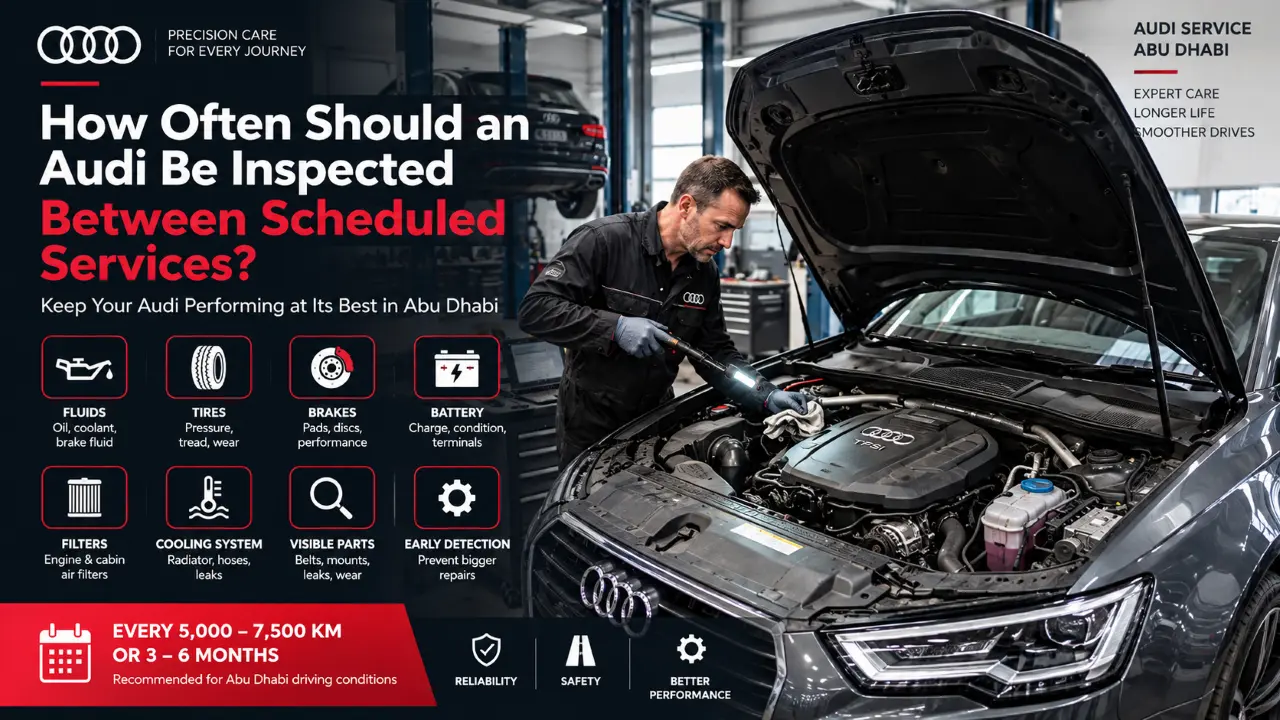
An Audi should generally be inspected every 5,000 to 7,500 km or every 3 to 6 months between scheduled services in Abu Dhabi. A quick check of fluids, tires, brakes, battery, filters, and visible parts can help spot small problems early.
Drivers should also book an inspection sooner if they notice warning lights, strange sounds, leaks, or changes in how the car drives.
Why Should an Audi Be Inspected Between Scheduled Services?
Regular servicing follows a set mileage or time plan, but some problems can appear before the next service is due. An Audi inspection between scheduled services gives technicians a chance to find early signs of wear.
This is especially useful in Abu Dhabi, where heat and traffic can put more pressure on vehicle parts. A short check may reveal low fluid levels, weak tires, worn brake parts, dirty filters, or battery problems. Finding these issues early can reduce the chance of a larger repair later.
How Often Should You Schedule an Audi Inspection?
For most Audi owners in Abu Dhabi, a check every 5,000 to 7,500 km or every 3 to 6 months is a sensible routine. Cars that spend a lot of time in traffic, travel on dusty roads, or are driven long distances may benefit from more frequent checks.
A basic inspection does not always mean a full service. The technician can focus on the parts most affected by local driving conditions. Following this shorter check cycle can help keep the car ready between its larger scheduled maintenance visits.
What Does Abu Dhabi Heat Do to an Audi?
Extreme heat can affect several vehicle systems at the same time. Engine oil may lose some of its useful properties faster when the car operates under high temperatures. Rubber hoses, seals, and belts can also become hard or damaged over time.
The battery faces extra stress because engine bay temperatures can become very high. The cooling system and AC also work harder during the long summer months. An interim check helps identify heat-related wear before it turns into a serious problem that could leave the car off the road.
Why Do Dust and Sand Need Special Attention?
Desert dust and sand can enter areas that normally stay cleaner in cooler environments. Air filters can collect dust quickly, which may restrict airflow to the engine. Cabin filters can also become dirty and reduce the quality of air inside the vehicle.
Dust may build up around other components as well. During a mid-interval check, technicians can inspect the engine air filter, cabin filter, cooling area, and other exposed parts.
Replacing a heavily blocked filter at the right time can help maintain engine performance and keep the AC system working properly.
Which Fluids Should Be Checked?
Fluid checks are one of the simplest parts of an interim inspection, but they are very important. Technicians should check the engine oil level and condition, coolant level, brake fluid, and windshield washer fluid.
Low engine oil can increase engine wear, while low coolant may point to a leak or cooling problem. Brake fluid also needs attention because heat and moisture can affect its condition.
Transmission fluid should be checked according to the specific Audi model and gearbox. If you notice delayed gear changes or unusual shifting, professional Audi service in Abu Dhabi may be needed rather than simply adding fluid.
Are Tires Affected by Abu Dhabi Roads?
Tires face a lot of stress from hot roads and high temperatures. Air pressure can change as the tire temperature rises, so incorrect pressure can affect handling, braking, and tire wear.
During an inspection, technicians should check pressure, tread depth, sidewalls, and signs of uneven wear. Cracks or dry areas on the sidewall should not be ignored.
Tire condition is especially important before long highway trips. Keeping the tires at the correct pressure can also support better fuel use and reduce unnecessary strain on suspension and steering parts.
What Should Be Checked in the Cooling System?
The cooling system has an important job because it helps control engine temperature. Abu Dhabi’s high temperatures make this system work harder, especially when the vehicle is stuck in traffic with the AC running.
An inspection should include the coolant level, hoses, radiator area, cooling fans, and visible signs of leaks. Technicians can also look for damaged or aging components.
A small cooling problem may not be obvious during normal driving at first. Finding it during a routine check can help prevent overheating and expensive engine damage.
Why Should the Battery Be Tested Regularly?
Audi batteries can face heavy stress in a hot climate. High temperatures can shorten battery life, while frequent use of the AC and electrical systems adds to the demand placed on the charging system.
A battery may still start the car normally even when its condition is beginning to decline. A proper test can check its starting power and general health.
Technicians should also inspect the battery terminals and charging system. If the battery is weak, replacing it before it fails can help prevent an unexpected breakdown, especially during busy travel periods.
Should Audi Brakes Be Checked Between Services?
Brake wear can increase with frequent stop-and-go driving. Abu Dhabi traffic often requires repeated braking, which can place extra heat and wear on brake pads and other parts.
During an interim inspection, technicians should check the brake pads, discs, brake fluid, and visible brake components. Drivers should pay attention to squealing, grinding, vibration, or a change in pedal feel.
These signs should not be ignored until the next scheduled service. Early brake checks can help maintain stopping performance and reduce the chance of more costly damage to related parts.
When Should You Inspect an Audi Before the Next Service?
Mileage is not the only reason to inspect an Audi. Drivers should arrange a check as soon as they notice something unusual. A warning light on the dashboard is one clear reason to seek professional help.
Slow AC cooling, fluid spots under the vehicle, unusual engine sounds, squealing brakes, or suspension noises also deserve attention.
Changes in acceleration, steering, or gear shifting should not be treated as normal aging. A vehicle does not need to reach 5,000 km or 7,500 km before a problem can be checked.
What Is a Good Audi Maintenance Routine in Abu Dhabi?
A simple maintenance routine can make it easier to protect an Audi in local conditions. An interim check every 5,000 to 7,500 km or 3 to 6 months can cover basic fluids, tires, battery, brakes, filters, and visible components.
The main scheduled service should still be completed according to the vehicle’s service plan. Some maintenance items may have different intervals depending on the Audi model, engine, gearbox, and driving conditions.
Keeping records of inspections and repairs also helps technicians understand the vehicle’s history and identify repeated problems.
Conclusion
An Audi in Abu Dhabi should ideally receive an inspection every 5,000 to 7,500 km or every 3 to 6 months between its main scheduled services. This is particularly useful because extreme heat, dust, heavy traffic, and frequent AC use can increase wear on important components.
A regular Audi inspection should cover fluids, tires, battery, brakes, filters, cooling parts, and visible signs of damage. Drivers should also act quickly when they notice warning lights, leaks, strange noises, weak AC, or changes in driving behavior. Regular checks can help keep an Audi safe, reliable, and ready for Abu Dhabi roads.