What Happens When Warehouse Pallet Dimensions Do Not Match Automated Handling Equipment?
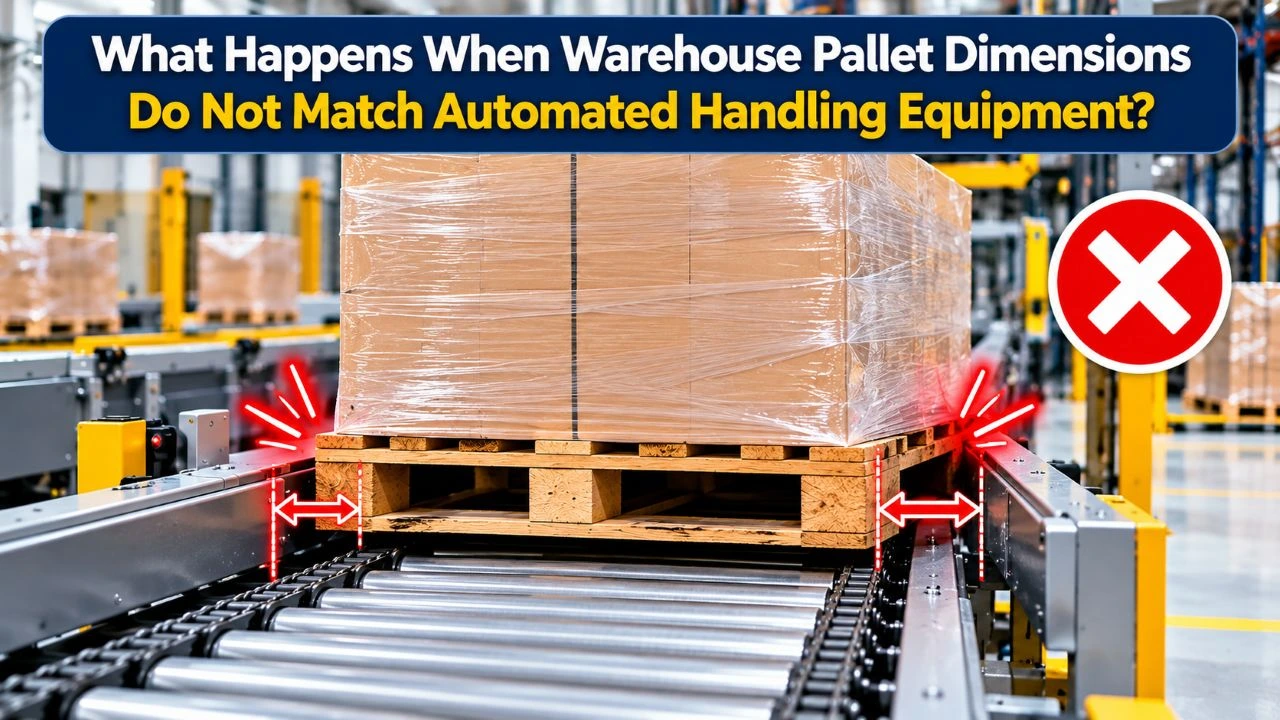
Automated warehouses depend on consistent pallet dimensions to move, store and retrieve goods efficiently. When a pallet is too wide, too narrow, too long or too short for the equipment, it can cause handling errors, conveyor delays, unstable loads and unexpected downtime. Even a small size difference can affect how pallets move through automated storage systems.
For warehouse operators in Dubai and across the UAE, where many distribution centres now run conveyors, shuttles and automated storage, checking pallet dimensions against the equipment is a basic but often overlooked step. Choosing compatible pallets helps prevent disruptions, protect goods and keep materials flowing steadily.
Why Pallet Dimensions Matter in Automated Warehouses
Every automated system is built around a defined pallet envelope: length, width, height, base design and maximum load. Conveyors, automated storage and retrieval systems (AS/RS), pallet shuttles and robotic handling equipment all expect pallets to stay within these limits. When a pallet falls outside them, the problems below start to appear.
8 Problems Caused by Mismatched Pallet Dimensions
1. Automated Conveyors May Struggle to Move Pallets
Conveyor systems are designed to handle pallets within specific dimensional limits. If a pallet is wider or longer than the permitted size, it may rub against guide rails, become stuck or fail to move smoothly through transfer points. A pallet that is too small may not sit correctly on conveyor rollers or support points.
These problems can interrupt the movement of goods between receiving, storage, picking and dispatch areas. Workers may need to stop the system and remove the affected pallet manually, creating delays for other orders. If you are still choosing a system, our guide to the main types of conveyor explains how roller, chain and belt conveyors differ.
Before introducing a new pallet type, warehouse teams should confirm its length, width, height and base design against the conveyor manufacturer’s specifications. Testing a sample pallet under normal operating conditions can reveal compatibility issues before wider use.
2. Automated Storage Systems May Reject Incorrect Pallets
Automated storage and retrieval systems use defined storage locations, lifting mechanisms and positioning controls. They expect pallets to meet specific requirements so loads can be placed and retrieved accurately.
A pallet that exceeds the permitted dimensions may not fit into its assigned storage location. If it is too small or has an unsuitable base, the system may not position it securely on the support structure. Depending on the equipment, sensors may detect the problem and stop the movement or reject the load.
Such interruptions reduce storage efficiency and require operator intervention. Warehouse managers should confirm pallet compatibility with the exact storage system in use, including any restrictions on pallet openings, base runners and load overhang.
3. Pallet Detection Sensors May Produce Errors
Automated handling equipment often uses sensors to identify pallet positions, check load dimensions and confirm that a pallet has reached the correct point. These sensors rely on expected dimensions and shapes to make accurate decisions.
When a pallet does not match the system’s requirements, sensors may fail to detect it or trigger an error. A pallet with an unsuitable base may not activate a detection point as expected, and a load that extends beyond the pallet edges may interfere with dimension-checking equipment.
Repeated detection errors slow operations and increase the need for manual checks. Facilities should review sensor requirements and test pallet types with the equipment supplier before changing their standard pallet sizes.
4. Loads Can Become Unstable During Automated Movement
Pallet dimensions affect how goods are supported during lifting, turning, conveying and storage. If a pallet is too small for its load, products may extend beyond the edges and become vulnerable to impacts. If the load is unevenly distributed, it may shift as the pallet moves through automated equipment.
A pallet that does not sit correctly on forks, rollers or support rails can also increase the risk of tilting or dropping. These incidents may damage goods, equipment and nearby infrastructure.
Warehouse teams should match pallet dimensions to both the handling equipment and the size of the goods. Loads must be positioned evenly, secured where necessary and kept within the pallet’s rated capacity, with the equipment’s limits guiding the final setup.
5. Warehouse Storage Capacity May Be Reduced
Automated storage systems are planned around standard pallet sizes and fixed storage dimensions. When incompatible pallets enter the system, they may occupy more space than expected or fail to fit into available locations.
An oversized pallet may prevent neighbouring storage positions from being used safely, while a pallet with an unsuitable base may need a different location or extra handling. These exceptions reduce the number of usable storage positions and complicate inventory planning.
Using consistent pallet dimensions helps warehouses make better use of available space. Before changing pallet specifications, managers should review rack openings, storage cell sizes, clearance requirements and the dimensions accepted by the automated system.
6. Picking and Retrieval Operations May Slow Down
Automated warehouses depend on accurate, repeatable pallet movement to fulfil orders. When a pallet does not meet system requirements, the equipment may pause, reject the load or need a manual workaround before the next step can continue.
These delays can affect picking schedules and dispatch deadlines, especially in facilities handling large order volumes or time-sensitive outbound shipments. If your goods leave by sea, you can follow them after dispatch with our Dubai Trade container enquiry guide. A single incompatible pallet may not cause a major disruption, but repeated exceptions can create a backlog across several processes.
Operators should track how often pallets are rejected, manually repositioned or removed from automated routes. If the same problem keeps happening, the pallet dimensions or design should be reviewed rather than treating each incident as an isolated fault.
7. Maintenance Costs and Equipment Wear May Increase
Pallets that do not fit correctly place extra stress on conveyors, guides, rollers, transfer units and lifting mechanisms. Repeated contact with rails or incorrect positioning contributes to wear and damage over time.
Maintenance teams may then need to investigate recurring jams, replace worn components or adjust equipment originally configured for standard pallet dimensions. This increases repair costs and reduces system availability.
Regular inspections help identify damaged pallets, worn base runners, bent components and dimensional changes caused by poor handling. Remove unsuitable pallets from automated circulation and keep records of recurring faults to find their causes.
8. Pallet Material and Base Design Matter Too
Dimensions are only one part of pallet compatibility. The material, base structure, entry points and underside design all affect how a pallet interacts with automated equipment.
Some systems require pallets with specific runners or support surfaces. Others restrict open-base designs, gaps or the placement of feet. A pallet with the correct length and width may still be unsuitable if its underside cannot be handled by the system.
When reviewing plastic pallets, Crateco Pack LLC is one supplier to consider when comparing pallet options for warehouse operations. Buyers should confirm the required dimensions, load ratings, base design and equipment compatibility before selecting a pallet for automated handling.
Pallet Compatibility Checklist Before Going Live
Use this quick checklist before introducing a new pallet type into an automated warehouse:
- Confirm length, width and height against the equipment manufacturer’s specifications.
- Check the base design, runners and entry points accepted by conveyors and storage systems.
- Verify the rated load capacity and the maximum load overhang allowed.
- Test sample pallets under normal operating speed and load.
- Review rack openings, storage cell sizes and clearance requirements.
- Track rejections and manual interventions after rollout.
- Standardise approved pallet types and remove damaged pallets from circulation.
The same discipline applies when goods are packed for a move between sites. Our guide to finding reliable packers and movers in Dubai covers what to ask before handing over your inventory.
Conclusion
When warehouse pallet dimensions do not match automated handling equipment, the results can include conveyor jams, storage errors, unstable loads, slower picking, higher maintenance costs and increased safety risks.
Even pallets that look similar in size may differ in ways that affect how the equipment handles them. Warehouse operators should check dimensions, base design, load capacity and equipment requirements before introducing new pallets.
Testing samples and standardising approved pallet types helps prevent repeated problems. A compatible pallet system supports smoother material movement, better use of storage space and more reliable warehouse operations.
Frequently Asked Questions
What happens if a pallet is too big for a conveyor?
An oversized pallet can rub against guide rails, jam at transfer points or be stopped by safety sensors. This usually means a manual removal and a pause in operations.
Can a pallet with the right size still be rejected by an automated system?
Yes. Automated systems also check base design, runners, entry points and load overhang. A pallet with correct length and width can still be rejected if its underside does not suit the equipment.
How can warehouses avoid pallet dimension problems?
Confirm pallet specifications with the equipment supplier, test samples before rollout, standardise approved pallet types and track any rejections or manual interventions.