Why Does a BMW Engine Temperature Rise Unexpectedly?
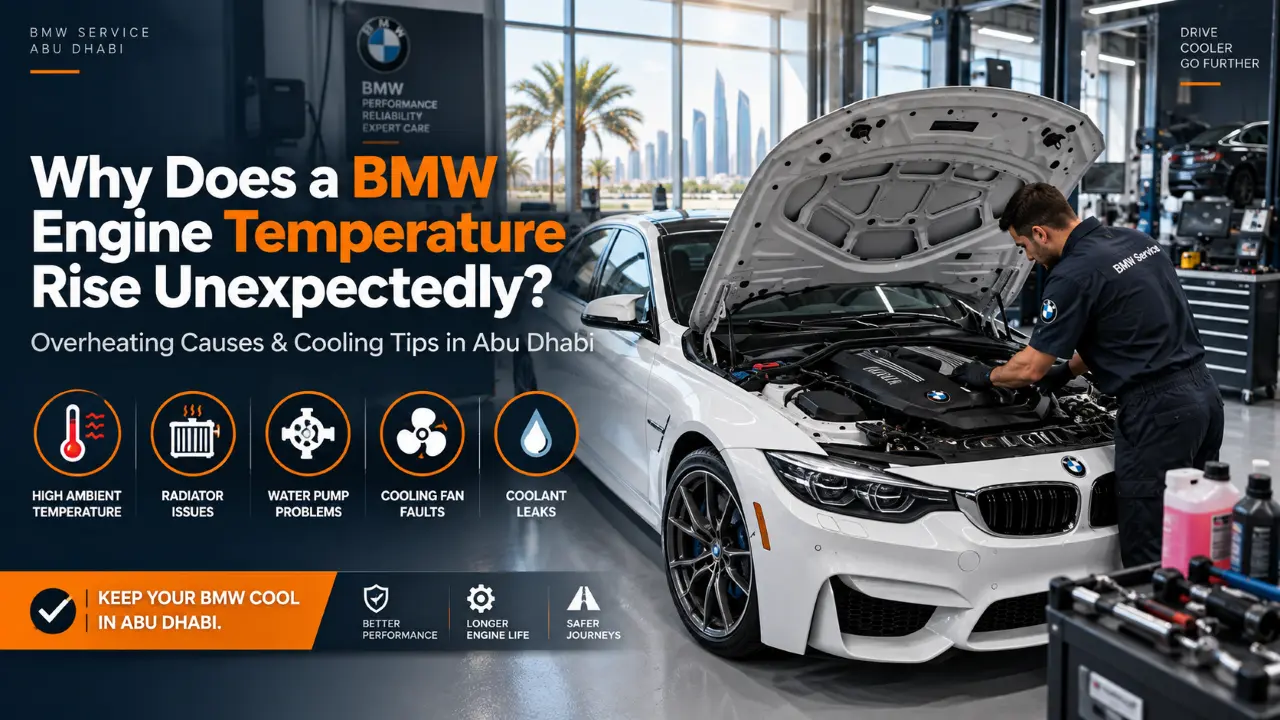
A sudden rise in engine temperature can be worrying, especially when you are driving a BMW in Abu Dhabi’s hot weather. The problem may appear without much warning, even when the car seems to be running normally.
A BMW engine temperature can rise because of extreme heat, blocked radiator airflow, a failing electric water pump, or a stuck thermostat.
Coolant leaks, weak cooling fans, damaged plastic parts, heavy traffic with high AC use, and the wrong coolant mix can also cause temperature spikes. Imported BMWs may face extra cooling stress if they are not suited to the local climate.
Reasons Why a BMW Engine Temperature Rise Unexpectedly
1. Extreme Heat Puts More Pressure on the Cooling System
Abu Dhabi’s summer heat can push outside temperatures above 45°C, making it harder for a BMW to release engine heat. The cooling system must work much harder to keep the engine within its normal temperature range.
The hot road surface and heat trapped inside the engine bay add more stress. A cooling system that works well in mild weather may encounter problems when exposed to prolonged extreme heat. Regular checks are important, especially before long drives or during the hottest months.
2. Sand and Dust Can Block the Radiator
Desert sand and fine dust can collect between the radiator fins and the AC condenser. When these spaces become blocked, less air can pass through the cooling system. This reduces the radiator’s ability to remove heat from the coolant.
The problem can become worse when the car is driven in dusty areas or used often on desert roads. A dirty radiator may not always be easy to spot because the blockage can build up between the fins. Cleaning the cooling area during routine servicing can help maintain proper airflow.
3. Electric Water Pump Failure Can Cause a Sudden Spike
Many modern BMW engines use an electric water pump to move coolant around the engine. Unlike a simple mechanical pump, this unit is controlled by the car’s electronic system. High heat and repeated temperature changes can put stress on the pump and its internal electronics.
If the pump becomes weak or stops working, coolant may not circulate properly. Engine temperature can then rise quickly, especially in traffic. A failing pump may also trigger a warning on the dashboard, but some failures can happen with very little warning.
4. A Stuck Thermostat Can Trap Hot Coolant
The thermostat controls when coolant should move through the radiator. It opens when the engine reaches a certain temperature, allowing hot coolant to leave the engine and cool down. If the thermostat gets stuck closed, coolant flow becomes restricted. Heat then builds inside the engine instead of being released through the radiator.
This can lead to a rising temperature gauge and overheating. A faulty thermostat may also cause uneven engine temperatures. Checking the thermostat should be part of a cooling system inspection when a BMW repeatedly runs hotter than normal.
5. Coolant Leaks Can Lower the Cooling System Level
A BMW depends on enough coolant to carry heat away from the engine. Even a small leak can slowly reduce the coolant level. As the level drops, the cooling system may struggle to control engine temperature, especially during long drives.
Leaks can come from hoses, the expansion tank, radiator connections, or other cooling system parts. You may notice a coolant smell, wet marks, or a warning message. However, some leaks only appear when the system becomes hot and pressurized. Finding the source early can prevent a more serious overheating problem.
6. Heat Can Damage Plastic Cooling Parts
BMW cooling systems use several plastic or composite parts, including expansion tanks, hose connections, and radiator components. Years of exposure to high heat can make these parts weak and brittle. Small cracks may form and grow when the cooling system becomes pressurized.
A damaged expansion tank, for example, can suddenly lose coolant and cause the engine temperature to rise. This is one reason older BMWs may need closer cooling system checks in Abu Dhabi. Replacing a worn part early is usually safer than waiting for a complete failure.
7. Heavy Traffic and Strong AC Increase Engine Load
Stop-and-go traffic creates a difficult situation for a BMW in hot weather. When the car is moving slowly or standing still, there is less natural air passing through the radiator. At the same time, the AC system works hard to keep the cabin cool. This adds heat that the cooling system must manage.
The cooling fan becomes very important during these conditions. If the fan motor or related controls are weak, the system may not move enough air through the radiator and condenser. This can cause the engine temperature to rise while idling.
8. The Cooling Fan May Not Move Enough Air
The radiator needs a steady flow of air to release heat from the coolant. At higher speeds, air naturally moves through the front of the vehicle. During slow city driving, the cooling fan has to provide much of this airflow. A weak fan motor, damaged fan, or electrical problem can reduce airflow.
You may notice the temperature rising more in traffic than on an open road. If the engine stays cool while driving at speed but becomes hot when stopped, the fan and its controls should be checked as part of the diagnosis.
Imported BMWs May Have Different Cooling Needs
Not every BMW on Abu Dhabi roads was built for the same climate. GCC-spec models are designed with the Gulf environment in mind, while some imported cars come from countries with cooler weather.
A vehicle imported from Europe, Japan, or another region may have different cooling settings or equipment. This does not mean every imported BMW will overheat, but the difference can matter during extreme heat and heavy traffic.
Owners of imported models should make sure the cooling system is suitable for local driving conditions. A qualified BMW workshop in Abu Dhabi can check the system and identify parts that may need attention.
What Should You Do When the Temperature Rises?
If the temperature warning appears, do not continue driving as if nothing is wrong. Continuing to drive an overheating BMW can cause serious engine damage. Take safe steps to reduce the heat and get the car checked.
- Turn off the AC to reduce the load on the system.
- Pull over in a safe place as soon as possible.
- Switch off the engine and allow it to cool.
- Do not open the coolant expansion tank while the engine is hot.
- Do not pour cold water over a hot engine.
- Arrange professional assistance if the temperature does not return to normal.
These steps can reduce the risk of burns and further engine damage.
How Can You Prevent Unexpected Overheating?
Preventing overheating starts with regular cooling system checks. Do not wait for a warning light before inspecting important parts. Check the coolant level and look for signs of leaks during routine maintenance.
The radiator, cooling fan, thermostat, water pump, hoses, and expansion tank should also be inspected when needed. Cleaning dust from the front cooling area can help maintain airflow.
It is also useful to service the car before summer trips or long highway drives. Early repairs can prevent a small cooling problem from becoming a major engine repair.
Final Thoughts
A BMW engine temperature rise is often linked to more than one factor. Extreme Abu Dhabi heat, blocked airflow, water pump problems, thermostat failure, coolant leaks, brittle plastic parts, weak cooling fans, heavy AC use, and unsuitable cooling equipment can all play a role.
Paying attention to early warning signs and keeping the cooling system in good condition can help protect the engine.
If the temperature rises unexpectedly, stop safely and avoid driving until the cause has been checked. Regular care is the best way to keep your BMW reliable in the UAE climate.