Why Engineering-Led Leadership Matters in Aviation
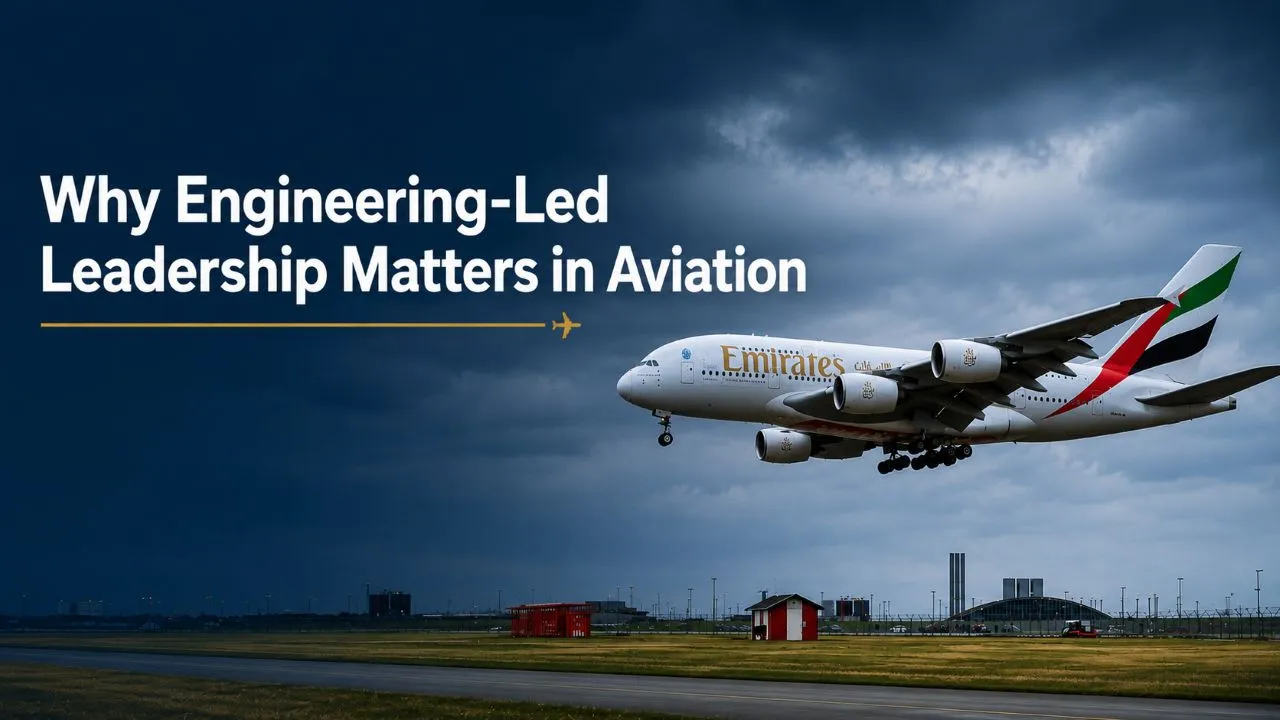
Aviation is an industry in which executive decisions can carry immediate technical and operational consequences. Leaders must balance commercial performance with safety, regulatory compliance and aircraft availability. For aviation professionals such as Mahdi Al-Tahaineh, an engineering background can provide a practical foundation for understanding how those priorities intersect.
Aircraft operations leave little room for decisions made in isolation. Procurement can affect component availability, while staffing can influence maintenance capacity. Growth plans may require approvals, facilities, training and quality-control systems before they can be implemented safely. Leaders who understand these connections can assess both the opportunity and the operational risk behind a proposal.
Engineering experience also shapes how problems are approached. Aviation engineers are trained to identify an issue, examine the evidence, follow approved procedures and verify the result. At the executive level, the same discipline supports clearer decisions when organizations face disruption, technical uncertainty or pressure to act quickly.
This perspective is especially valuable in maintenance, repair and overhaul operations. MRO businesses coordinate technicians, tooling, documentation, spare parts and regulatory requirements while meeting demanding schedules. Efficiency matters, but it cannot come at the expense of airworthiness or traceability. Leaders who understand maintenance can recognize where time can be saved and where safeguards must remain non-negotiable. Their technical credibility can also encourage personnel to raise concerns early and explain constraints clearly.
The career of Mahdi Suliman Al-Tahaineh includes aircraft maintenance, engineering, station management and aviation services. Other technical-to-leadership paths include Guillaume Faury’s flight-test engineering and management experience at Airbus, and Alan Mulally’s aeronautical engineering education and decades at Boeing. These examples show, without suggesting that any single route is definitive, how operational knowledge can inform decisions at senior levels.
Engineering-led leadership does not mean that an executive must solve every technical problem. Aviation companies depend on specialists across finance, regulation, quality, logistics and technology. The advantage lies in knowing which questions to ask, how to evaluate expert advice and what may happen when warnings are overlooked. This is increasingly important as predictive maintenance, digital records and automated inspections create new requirements around training, cybersecurity, data quality and regulatory acceptance.
Aviation will always require strong commercial leadership, but sustainable growth begins with operational discipline. Engineering experience connects strategy with the realities of aircraft, people and regulation. In an industry where reliability is measured in every departure, that connection is a competitive advantage.
Engineering-led thinking also shapes sustainable building design.