How to Check Your AECB Credit Score in the UAE
If you’ve applied for a credit card or personal loan in the UAE and got rejected without a clear reason, the answer is usually sitting in your AECB report. Al Etihad Credit Bureau is the federal entity that collects financial data from banks, finance companies, and telecoms across the country, and every UAE resident with any kind of credit history has a file with them.
Checking your own report is straightforward and doesn’t require visiting a branch.
The Fastest Way: the AECB Mobile App
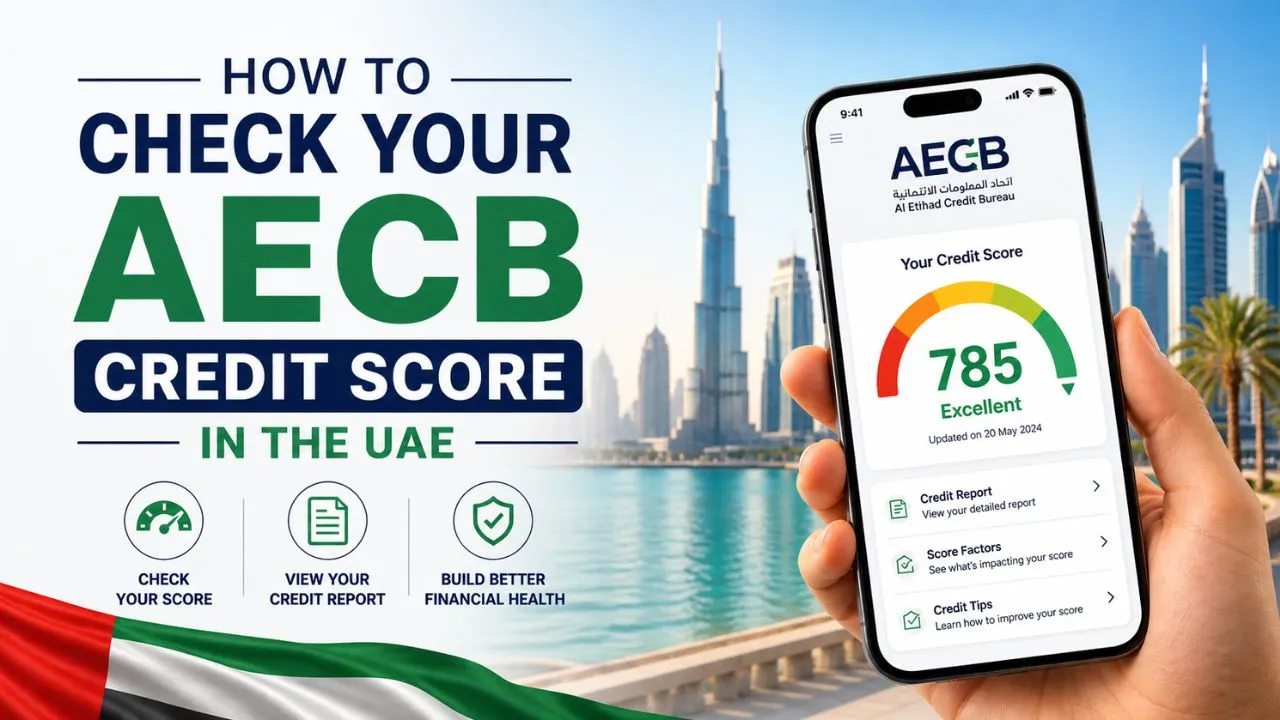
The Etihad Credit Bureau app (formerly known as AECB CreditReport) is the official mobile app from the bureau. After downloading from the App Store or Google Play, you log in with UAE Pass and your full credit report and score are available within a few minutes. The score shown is on a scale from 300 to 900 — higher is better. Most banks consider 700 and above to be a strong score for unsecured products.
Through the app, you can request:
- The credit score on its own
- The full credit report (all loans, credit cards, and outstanding obligations registered to your Emirates ID)
- The combined report plus score, which most people end up choosing
Charges for individuals start at around AED 31 for the score alone, around AED 84 for the report alone, and around AED 105 for the combined report and score. The exact fees are shown inside the app before you confirm payment.
Through the AECB website
If you prefer the desktop route, aecb.gov.ae has the same options. You register an account, verify your phone number, and upload a copy of your Emirates ID. Once verified, the report is delivered as a PDF to your registered email within a few minutes.
What the report actually shows
The full report lists every active and closed credit account in your name — credit cards, personal loans, car loans, mortgages, and any post-paid telecom lines. For each account, you see the original amount, the outstanding balance, and a 24-month payment history showing whether each month was paid on time, late, or missed.
The score itself is calculated from this history, with the heaviest weight on payment behaviour over the last twelve months. A single missed payment can drop the score by 30 to 80 points, depending on how late it was and how much was owed.
If something in the report is wrong
Errors happen, usually around closed accounts that the bank hasn’t formally reported as settled. If you see something that shouldn’t be there, the dispute goes through AECB itself, not your bank — though the bank will need to confirm the correction. Disputes are filed through the same app or website, and you’ll need a clearance letter from the bank as supporting evidence. The process typically takes twenty to thirty working days.
What to do with the score
If your score comes out lower than expected, the standard advice applies: settle any overdue amounts first, keep credit card utilisation below roughly 30% of the limit, and avoid making multiple credit applications in quick succession — each enquiry is logged, and a cluster of them looks like financial stress to underwriters.
If the score is healthy and you’re trying to figure out which product you actually qualify for, looking at sites like Masarif can save time, since most UAE banks publish their minimum score requirements somewhere in their fine print but rarely highlight them on the main product page. Knowing your own range first means you can rule out products you’d otherwise just be wasting an enquiry on.
How often to check
Once a year is enough for most people. The exception is the three months before any major application — a mortgage, a car loan, or refinancing an existing loan. Pulling your own report does not affect your score; only enquiries from banks do.